Quick answer
Optimising your Instagram profile means making sure that when someone lands on it, they instantly understand who you are, what you do, and why they should follow you. The most important areas to fix are your bio, your grid aesthetics, your highlights, and your keywords. Get these right and your profile starts working for you, even when you're not posting.

You spent time building your business. You show up on Instagram. You post. And yet, when someone visits your profile, they scroll for a few seconds and leave without following, without clicking the link, without doing anything.
Most business owners optimise their Instagram once, usually when they first set it up, and never touch it again. Meanwhile, their audience has changed, their business has evolved, and their profile is still introducing them in the way they did three years ago.
This guide covers everything you need to fix, update, and maintain so your Instagram profile actually does its job.
Here's what we're covering:
Why your Instagram profile is losing you clients before they even follow you?
How to optimise your Instagram bio to get found and followed?
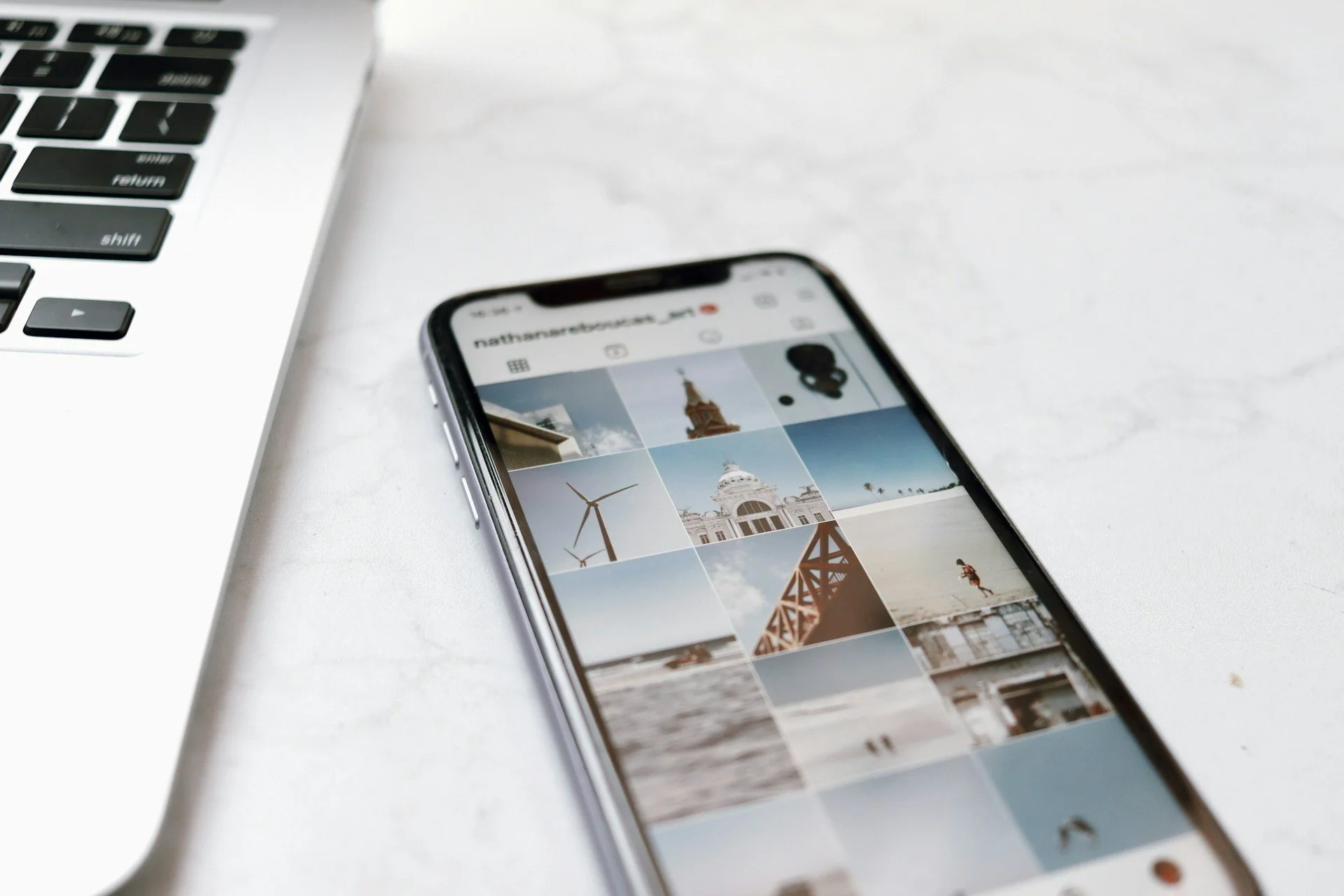
What your profile grid is telling people about your business?
How to use highlights, keywords and hashtags to get discovered?
Why optimising your profile once isn't enough?
FAQ
#1: Why Your Instagram Profile Is Losing You Clients
Before They Even Follow You?
You have a few seconds. That's it. When someone lands on your Instagram profile for the first time, they decide almost immediately whether to follow, click, or leave. Most of the time, it's leave, and here's why.
Why posting randomly is costing you the right followers?
One of the most common mistakes business owners make is posting what they think their audience wants to see rather than what their audience is actually looking for. Generic motivational quotes. Random behind-the-scenes moments. Content that feels right but isn't built around anything specific.
The fix is simpler than most people think. What are your clients already asking you? What do they Google before they find you? What comes up in your DMs repeatedly? Those questions are your content. When your posts answer the exact things your audience is searching for, the right people start finding you, and staying.
How messy branding is quietly pushing people away?
Think about the last time you met someone for a business meeting. You noticed how they looked, how they carried themselves, what impression they gave before they said a word. Your Instagram feed is exactly that. It's your visual business card — and if it has five different fonts, inconsistent colours, and a mix of low-quality images and polished graphics, it tells people one thing: this business isn't quite put together.
It doesn't matter how good your service is. If the visual first impression doesn't match the level of what you do, people leave before they find out.
What happens when your profile doesn't explain itself?
Someone visits your profile. They look at your bio, glance at a few posts, and still have no idea what you actually offer or whether it's relevant to them. So they leave.
This happens more than most business owners realise. Your profile needs to answer three questions in under five seconds — who are you, who do you help, and what should they do next. If any of those answers are missing or buried, you're losing potential followers and clients every single day.

#2: How to Optimise Your Instagram Bio
to Get Found and Followed?
Your bio has four lines. Four lines to tell someone exactly who you are, who you help, why they should care, and what to do next. Most bios waste at least two of them.
Why your name field is more powerful than you think?
The name field at the top of your Instagram profile is searchable, which means it's one of the most valuable pieces of SEO real estate on your entire profile. Don't just put your name. Put your name and your title, or what you do. For example, "Erika - Social Media Strategist" or "Sarah - Wedding Photographer London". This is what gets you found when people search for what you do, not just who you are.
What should each line of your Instagram bio actually say?
Each line in your bio has a purpose. The first line should tell people exactly who you help. The second line should give them a reason to trust you — a result you've achieved, a number worth mentioning, something that backs up what you do. The third line is your call to action, where to go, what to download, what to book.
Clean. Specific. No wasted words.
How your profile picture and highlights build instant trust?
Your profile picture needs to be a clear, recent image of you — not a cartoon, not a photo from five years ago, not a blurry crop from a group shot. For brands, your logo works. For service providers, your face builds trust faster than any graphic ever will.
For highlights, keep them organised, relevant, and recent. Anything older than two years should go. The strongest highlights to have are client wins, testimonials, and free value content where you share tips and advice. Think of your highlights as the first thing a new visitor browses after reading your bio — make sure what they find there makes them want to stay.
As part of our strategy and consultation packages, we create optimised bios for every client — several versions so they can choose what fits best. If you want yours done properly, find out more about our consultation package here.

#3: What Your Profile Grid Is Telling People
About Your Business?
There is a conversation happening in the social media world that goes something like this: the look of your Instagram doesn't matter anymore, it's all about the content. And here's the thing — the people saying that? Their grids are immaculate. So let's be clear. It matters.
Why your grid makes or breaks a first impression online?
Imagine you're choosing between two businesses offering the same service. One has a clean, consistent feed — same colour palette, clear fonts, posts that look like they belong together. The other has a mix of everything — bright green one day, dark blue the next, three different fonts across five posts, a blurry photo sandwiched between two polished graphics. Which one do you trust with your money?
Your grid is making that argument for you before you've said a word. When it's messy, the eye doesn't know where to land. It jumps from one thing to the next, finds nothing to hold onto, and moves on. When it's clean and consistent, it pulls people in — and keeps them there long enough to actually read what you're saying.
What simple rules actually make your feed look professional?
You don't need a designer on retainer to have a consistent feed. You need a few rules and the discipline to follow them.
Stick to two main fonts across all your designs — three maximum if you include a handwritten accent font used sparingly to highlight one word or add a signature. No more than that. Every time a new font appears, it costs you a little credibility.
Keep your colour palette tight. If your brand colours are navy and cream, that's what your feed should reflect. If a video has a green background because that's your office wall — fine. But your reel covers, your carousels, your static posts should all feel like they belong to the same brand.
How to balance your grid without it looking like a textbook?
One thing most people don't realise is that reel covers only appear on your grid — no one sees them while the reel is playing. Which means your grid is a mix of post designs and reel cover images, and if every single one of them is covered in text and hooks, the overall effect is overwhelming.
Balance it out. Use simple, aesthetic images as some of your reel covers — no text, just a clean visual that matches your colour palette. This gives the eye somewhere to rest between the text-heavy posts and makes the whole feed feel considered rather than crowded.
The hooks and text on your posts still need to be easy to read at a glance. If someone has to squint or zoom in to understand what a post is about, you've already lost them.
#4: How to Use Highlights, Keywords and Hashtags
to Get Discovered?
Getting found on Instagram in 2026 is not about posting more. It is about making sure the right words are in the right places, and that your profile is set up to be discovered by people who are actually looking for what you offer.
How to organise your highlights so people actually use them?
Your highlights are the first thing a new visitor explores after reading your bio. Think of them as a curated introduction to your business — not an archive of every story you have ever posted.
Sort them by topic and keep them clean. The strongest highlights to have are client wins, testimonials, and free value content where you share tips and useful advice. If you run promotions or have a signature offer, those are worth featuring too. Anything older than two years should be removed — your profile needs to feel current, not like a time capsule. And one quick tip — polls are great for engagement but do not save them to your highlights. They do not age well and they clutter what should be your best content.
Why keywords in your bio and posts matter more now?
Every time you create a post, write down the main keywords for that topic before you start. Then make sure those keywords appear naturally in your hook, your caption, and your call to action. This is not about stuffing words in — it is about being consistent and intentional with the language you use so Instagram understands what your content is about and who to show it to.
The same applies to your bio. Identify the keywords your ideal client would search for and make sure they are included in your name field and bio lines. This is how you get found by people who have never heard of you.
What Instagram actually says about hashtags in 2026?
This one has been confirmed. Instagram has officially moved away from the thirty hashtag approach that everyone used to swear by. In 2026, the recommendation is no more than three hashtags per post — and some accounts perform just as well with none at all.
If you do use hashtags, make them specific. Broad hashtags like #marketing or #business put you in a pool of millions of posts where you will never be seen. Niche, specific hashtags relevant to your content and your audience give you a much better chance of reaching the right people. Test both approaches — with and without — and let your insights tell you what works for your specific account.

#5: Why Optimising Your Profile Once
Is Never Enough?
Most business owners set up their Instagram profile once and treat it like a finished task. Bio written, profile picture uploaded, highlights sorted — done. But your profile is not a one-time job. It is an ongoing part of your social media strategy.
How testing your bio helps you find what actually works?
Think of your bio as an experiment rather than a fixed statement. Add a set of keywords, update your call to action, tweak the way you describe what you do — then give it time. A month is a good testing period because it gives you enough time to run a consistent content strategy alongside the profile changes and actually see how they perform together.
After that month, look at your insights. Are more people clicking your link? Are you attracting the right followers? Is your profile visit to follow rate improving? The numbers will tell you whether what you have is working or whether something needs to change.
Why your business growth means your bio needs updating too?
Your business evolves. Your offers change, your ideal client shifts, your results get stronger. A bio you wrote eighteen months ago might be describing a version of your business that no longer exists. If your current bio still reflects where you were rather than where you are — it is costing you followers and clients without you even realising it.
Set a reminder every one to two months to revisit your profile. Reread your bio as if you are a stranger seeing it for the first time. Does it still make sense? Is it still clear? Does it reflect the level your business is actually at right now?
What to put on your calendar to keep your profile sharp?
Treating your profile optimisation like a recurring task rather than a one-off job is what separates accounts that grow consistently from those that plateau. Add these to your content calendar:
Revisit and update bio every four to six weeks. Audit your highlights every two months and remove anything outdated. Check your profile keywords every quarter and update them based on what is performing. Review your grid balance every month — does it still look clean, consistent, and intentional?
If you want your bio optimised properly from the start, this is something we handle as part of every strategy and consultation package. We create several bio versions for each client so they can choose what fits their brand best. Find out more about our consultation packages here.
Key Takeaways
If you have read this far, here is what matters most:
Your Instagram profile is not just a page — it is the first impression a potential client gets of your business. When it is unclear, inconsistent, or outdated, people leave before they ever find out what you actually offer.
The five things worth fixing first:
Your bio needs to answer who you are, who you help, what result you deliver, and what to do next — in four lines or less. Your grid needs to look like it belongs to one brand — consistent colours, consistent fonts, and a balance between text-heavy posts and clean visuals. Your highlights need to be organised, recent, and relevant — not an archive of everything you have ever posted. Your keywords need to appear consistently across your bio, your hooks, and your captions so Instagram knows who to show your content to. Your profile needs to be revisited regularly — not set once and forgotten.
A well optimised profile gets found more easily, converts more visitors into followers, and turns more followers into enquiries. That is the point of all of it.
Still Not Sure Where Your Profile Is Going Wrong?
If your Instagram profile is not doing its job — whether that is getting found, converting visitors into followers, or attracting the kind of clients you actually want — the problem is usually not your content. It is the strategy behind it.
Our 1:1 consultation package is six structured sessions built around your specific business, your profile, and your goals. We audit everything, identify what is not working, build your strategy from the ground up, and give you a three-month plan you can follow independently. Bio optimisation included — we create several versions so you can choose the one that fits best.
By the end you will know exactly what to post, how to optimise your profile for the right audience, and how to read your own insights so you can keep growing without guessing.
Explore the Consultation Package →
FAQ
How long until you see results after optimising your profile?
Most accounts start to see a difference within 30 days of implementing consistent changes — better profile visit to follow rate, more relevant followers, and higher reach on posts. That said, optimisation works best alongside a consistent content strategy. The profile gets people to stay — the content gets them to follow and engage.
How often should you update your Instagram bio for business?
Every four to six weeks is a good starting point. Your bio should reflect where your business is right now — not where it was a year ago. If your offers have changed, your results have improved, or your ideal client has shifted, your bio needs to catch up. Treat it as a living part of your profile, not a finished task.
Do hashtags on Instagram still work the same way in 2026?
Yes — but not the way they used to. Instagram has officially reduced the recommended number of hashtags to three or fewer per post. More than that and the platform is less likely to distribute your content. If you use hashtags, make them specific and relevant to your content and audience. Broad hashtags like #business or #entrepreneur put you in a pool too large to be seen.
What should every business Instagram bio actually include?
Four things — who you are, who you help, a result or achievement that builds trust, and a clear call to action. Every line should earn its place. If someone reads your bio and still does not know what you do or whether it is relevant to them, it needs rewriting.
Why is my profile getting visits but no new followers yet?
Usually it comes down to one of three things — your bio is not clear enough, your grid does not look consistent or professional, or the content visible on your profile is not relevant to the people landing on it. Start with your bio and grid before anything else. Those two things alone make the biggest difference to whether a profile visitor becomes a follower.
Your Profile Is One of the Easiest Things to Fix. Start Here.
If your profile is getting visits but not converting them into followers or enquiries, the strategy behind it needs work. That is exactly what our consultation package is built for.
Six sessions, a full profile audit, an optimised bio, and a three-month plan tailored to your business. You leave knowing exactly what to do, why it works, and how to keep building on it independently.
Erika. Founder, Déavi Marketing
